
FINLEY BESS
Finley, NSW
ABOUT
Gransolar Development Australia (GDA) is proposing to develop the Finley Battery Energy Storage System (BESS) at the corner of Canalla Road and Broockman’s Road (eastern side), Finley (Lot 3 DP740920).
The project is proposed to have a storage capacity between 200 MWh and 400MWh and a maximum discharge capacity of 100 MW, enabling it to dispatch electricity during periods of peak demand. By shifting energy from periods of lower demand to peak demand periods, the project will support electricity network reliability, stability and resilience across New South Wales.
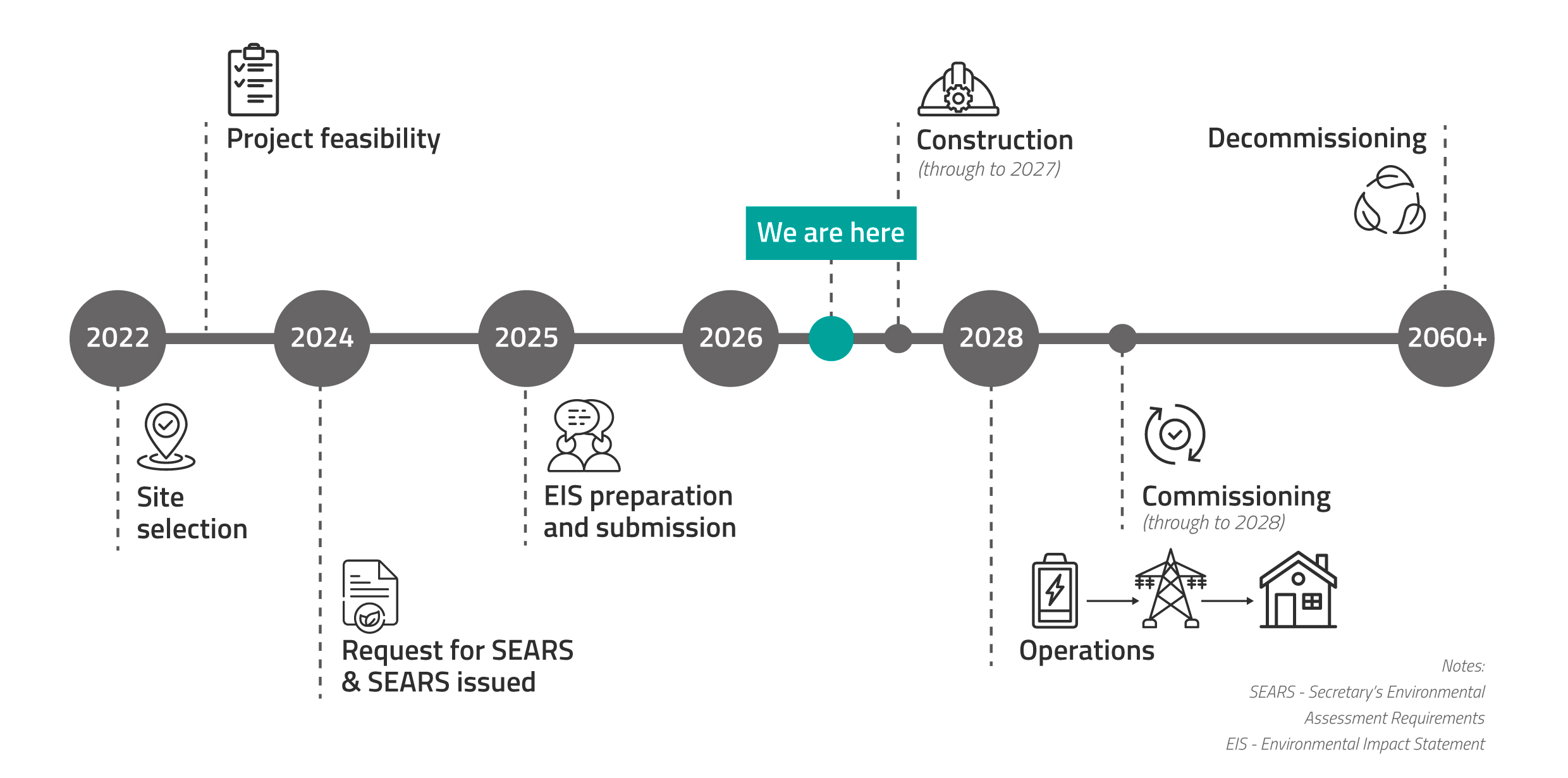
The Finley BESS has completed its Environmental Impact Statement (EIS) and has progressed through public and agency exhibition. As of January 2026, the project is at the final stage of responding to submissions and is about to enter formal assessment by the NSW Department of Planning, Housing and Infrastructure (DPHI).
Project determination is anticipated in mid-2026.
The publicly exhibited project documentation is available on the NSW Government Major Projects portal here:
Finley Battery Energy Storage System State Significant Development Application (SSD-72430958)

Dwellings powered

Battery power
Battery storage

Construction period
OUR COMMUNITY
GDA is committed to transparent, ongoing engagement with the Finley community, neighbouring landowners, Traditional Owners, Berrigan Shire Council and government agencies throughout assessment, construction and operation.
Engagement for the Finley BESS has been undertaken in stages, commencing during early project development and continuing through EIS preparation, public exhibition and the current Response to Submissions phase. Community and stakeholder feedback has directly informed project design, mitigation measures and commitments documented in the EIS and Response to Submissions.
More information on how GDA engages with communities and First Nations stakeholders can be found here:
> Community & Stakeholder Engagement Plan
COMMUNITY INPUT
The proposed Finley BESS will be located on privately owned land at the corner of Canalla Road and Broockman’s Road (eastern side), Finley, New South Wales, and will connect to the nearby Finley Transgrid Substation.
The site was carefully selected following detailed technical, environmental and planning assessment to ensure it meets operational requirements while minimising potential impacts on the surrounding community and environment.
The proposed development will occupy a relatively compact footprint. A range of mitigation measures have been incorporated into the project to minimise potential visual, acoustic and construction-related impacts on surrounding land uses and the local community.
Community and stakeholder feedback received during preparation of the EIS and exhibition has informed the project’s design, mitigation measures and commitments, including proposed community benefit arrangements. GDA remains committed to working with Council, Traditional Owners and the local community to deliver meaningful community benefits that support the local economy.
GDA will continue to keep the community and stakeholders informed as the Project progresses through assessment and, subject to approval, into construction and operation.
COMMUNITY BENEFITS
Reliable energy supply: The Finley BESS will support a more stable and reliable power supply, reducing the risk of outages and maintaining electricity during peak demand times or storing excess energy during low consumption.
Contributes to a sustainable future: By storing and using power from all generation sources including renewables (solar, wind, hydro), the Finley BESS will help to reduce our reliance on fossil fuels, leading to enhanced network stability and a healthier environment.
Economic benefits: GDA is dedicated to local spend and job creation. Where possible, we aim to prioritise local suppliers and contractors to ensure that a significant portion of our project’s budget is spent within the community.
Local community benefits: GDA is dedicated to working with the local community and key stakeholders to develop meaningful community benefits that directly enhance community well-being, sustainability, and resilience.
Local partnerships: Through fostering open and inclusive partnerships, GDA aims to implement initiatives that address local needs and build long-term positive relationships
within the community.
OUR LEGACY
Gransolar Development Australia is a leading development platform for Battery Energy Storage Systems (BESS), solar photovoltaic (PV) and hybrid projects in Australia.
In collaboration with landholders, stakeholders, and communities, Gransolar Development Australia is pursuing a pipeline of more than 2,000MW in renewable projects of primarily Ready To Build projects.
Our projects target designated Renewable Energy Zones (REZ) and non-REZ zones that connect with the National Electricity Market (NEM) from Queensland to South Australia.
FREQUENTLY ASKED QUESTIONS
Where will the BESS be located, and what is its capacity?
A: The proposed Finley BESS will be located at the corner of Canalla Road and Broockman’s Road (eastern side), Finley (Lot 3 DP740920), with a capacity between 200 MWh and 400MWh and a maximum discharge capacity of 100 MW, enabling it to dispatch electricity during periods of peak demand. GDA acknowledges the people of the Wiradjuri Nation as the primary guardians, keepers and knowledge holders of the land.
Why has the land been selected for the Finley BESS?
A: The site was selected following in-depth assessment and evaluation to ensure the site effectively meets technical, environmental, and community needs.
The proposed development will occupy a relatively compact footprint, minimising visual impacts to surrounding areas and the local community. The site also neighbours an existing substation, enabling the BESS to be connected to the New South Wales electricity grid.
What is a BESS?
A: A Battery Energy Storage System (BESS) stores electrical energy in batteries for later use. It helps in balancing supply and demand on the power grid by storing excess energy when it’s available and distributing it during peak demand. This improves grid stability and reliability by providing a flexible and responsive energy resource.
How does a BESS work?
A: A BESS functions like a large-scale household battery, with additional technology. It stores electrical energy captured from various sources, such as traditional power and renewable energy (like wind or solar), and then releases this stored energy back into the grid when needed. A BESS includes components like inverters for converting energy, control systems for managing storage and distribution, and safety features to ensure efficient and reliable operation.
What will the Finley BESS look like?
A: A BESS typically contains groups of battery modules housed in shipping containers or enclosures. These modules are connected to power conversion systems and control equipment, ensuring efficient energy storage and management.
BESS facilities are modular and can be configured based on specific site and capacity requirements.
During the project planning phase, considerations will be made for visual impact mitigation, including the potential use of screening methods such as landscaping or artificial barrier to blend the facility with its surroundings and reduce its visual footprint (if required).
How tall will the on-site structures be?
A: Typically, the BESS units are housed in shipping containers that are approximately 3m high. The switchgear buildings and the main transformers are yet to be confirmed but expected to be around 6m and 30m high respectively.
Planning and Approvals
What is an Environmental Impact Statement (EIS)?
A: An Environmental Impact Statement (EIS) in New South Wales (NSW) is a detailed report that helps understand the potential environmental effects of a proposed project. The EIS looks at how the project might impact the environment, such as air quality, water, wildlife, and local communities. It also suggests ways to minimise any negative effects. Once the EIS is ready, it’s shared with the public, giving everyone a chance to provide feedback. Ultimately, the EIS helps decision-makers determine if the project should go ahead, and if so, under what conditions.
Where is the project in its planning phase?
A: The Finley BESS has completed its EIS, progressed through public and agency exhibition, and completed the response to submissions. As of February 2026, the Project has entered into formal assessment by DPHI.
How can I have a say?
A: Please contact GDA via contact@finleybess.com.au or use the ‘Get in Touch’ link to register for project updates.
What long-term planning considerations have been included?
A: The EIS application is accompanied by a range of additional supporting materials and technical assessments including:
• Biodiversity
• Cultural heritage
• Noise and vibration
• Traffic impact assessment
• Ground/surface water and flood risk
• Waste management
• Community and stakeholder engagement
Working With Community
How will our community benefit?
A: The Finley BESS will benefit the local community by enhancing grid stability, reducing reliance on fossil fuels, and supporting renewable energy integration, which can lead to lower electricity costs, improved energy reliability, and reduced environmental impact, fostering a cleaner and more resilient energy infrastructure.
How will you work with First Nations groups?
A: GDA will engage with the People from the Wiradjuri Nation with the intension of working together to deliver this project with a mutually beneficial approach.
How can I find out more about the project?
A: Email contact@finleybess.com.au or call 0260469977 for specific queries or subscribe to our project updates using the ‘Get in Touch’ form.
How can I receive project updates?
A: Complete the ‘Get in Touch’ form to register for project updates
Construction and Operation
How long will construction last?
A: Construction is anticipated to take up to 18 months, weather and site conditions permitting. We will keep the community updated as the project progresses in the lead up to and during construction.
What impacts are anticipated during construction?
A: During construction, nearby residents and businesses may experience increased vehicle movements in the area, noise and dust from heavy machinery and minor vibrations.
• Changed traffic conditions: Changed traffic conditions will be in place during construction, with the use of traffic control to manage the flow of traffic, to maintain local access and to always ensure pedestrian safety. Please take care and observe all signposting, speed limits and any directions given by traffic controllers.
• Noise: There will be increased levels of noise generated by heavy machinery and increased vehicle movements during construction. GDA will put in place measures to limit the impact on local residents as much as possible. This may include scheduling works so that noisier activities occur at times when they will have the least impact.
How much noise will be generated during construction and operation?
A: Construction noise levels will be kept in line with relevant legislation, with noise generating activities scheduled to occur during the day and within approved working hours.
Operational BESS facilities have the potential to generate noise associated with the cooling fans required to regulate the operating temperature of individual battery cells.
Once operating, the BESS will be required to meet strict noise requirements and comply with the relevant environmental noise standards and/or guidelines.
How will you manage environmental impacts during construction?
A: A Construction Management Plan will be prepared prior to construction starting. During construction, some of the key construction impacts may include:
• Traffic: Construction traffic will be managed through a Traffic Management Plan (TMP)
• Noise: Construction and operational noise will meet New South Wales EPA requirements. Increased noise will be managed by putting in place measures to limit the impact on residents as much as possible. This may include scheduling works so that noisier activities occur at times when they will have the least impact.
• Social and economic: During construction, you may find more people and vehicles around town and on the roads. This additional temporary workforce will assist in providing an economic boost through spending on accommodation, food and local goods and services.
How long will the BESS operate?
A: It is expected that the BESS facility will operate for at least 15 to 25 years and, depending on the selected technology components, may be replaced and/or upgraded to extend this timeframe.
How will you manage bushfire risks during BESS operation?
A: The safety of our workers and the broader community is always our priority. We will work with Fire and Rescue New South Wales Services to ensure site design and preparedness meet stakeholder expectations.
The design and installation of the battery system will be undertaken in accordance with relevant Australian Standards, fire safety and emergency services guidelines and will be operated in accordance with the manufacturers requirements. A site operational management plan will be prepared by the service provider detailing information regarding procedures to be implemented in the event of a fire. Key mitigation measures include maintaining a fire break around the facility and having onsite fire water tanks.
What is the battery recycling and decommissioning plan?
A: Following the end of their economic life, above ground components would be removed and re-purposed where possible, and the land rehabilitated and recontoured, if and as required. Battery recycling and decommissioning involves safely extracting reusable materials from spent batteries, minimising environmental impact, and disposing of hazardous components responsibly, often through specialised recycling facilities or programs?
PROJECT PROGRESS
GET IN TOUCH
Your input is crucial in shaping this project. We are committed to transparent communication and engaging with residents and the community. If you would like to contact us regarding the project, please fill out the form: